5 May 2026
How Blog Content Helps in Building Brand Authority
Companies that blog consistently generate 55% more website visitors than those that don't, according to HubSpot. That single statistic reveals something many growing businesses overlook: blog content is not just a publishing activity. It is one of the most effective long-term investments a brand can make.
Brand authority — the degree to which your audience trusts and respects your expertise — is no longer built through advertising alone. It is built through consistent, credible, and useful content that answers real questions and solves real problems.
Platforms like SubPage make it easier for businesses to publish and manage blog content without heavy development overhead. But the strategy behind what you publish matters just as much as where you publish it. In this post, we break down exactly how blog content drives brand authority, and what it takes to do it well.
What brand authority actually means
Brand authority is the perceived level of expertise and trustworthiness your brand holds within your industry. It is not the same as brand awareness. A company can be widely recognized and still lack authority. Authority is earned when your audience consistently turns to you for guidance, not just products.
Think of the brands you consult before making a major purchase or decision. They have likely published articles, guides, or case studies that shaped your understanding. That is authority in action — and blog content is one of the primary channels through which it is built.
For businesses, authority translates to shorter sales cycles, higher conversion rates, and stronger customer retention. People buy from brands they trust. And trust is cultivated through repeated, valuable interactions — many of which start with a blog post.
How blog content builds authority over time
Brand authority through blogging is not built overnight. It is cumulative. Each post adds to a body of work that signals depth of expertise. Here is how this process unfolds across key areas:
Demonstrating expertise consistently
Every blog post is an opportunity to show what your brand knows. When you publish well-researched content that addresses genuine problems in your industry, your audience begins to associate your brand with knowledge and reliability.
This is particularly important for B2B brands and SaaS companies, where buyers conduct significant research before engaging a vendor. According to the Content Marketing Institute, 96% of B2B buyers want content with more input from industry thought leaders. Consistent blog publishing positions your brand to meet that demand.
Improving search engine visibility
Search engines reward websites that publish consistent, high-quality content. Each new blog post gives search engines more indexed pages to serve to users, expanding your organic reach. Over time, this creates a compounding effect: more content means more keywords, more traffic, and more opportunities to be discovered.
A brand that consistently ranks for relevant queries is automatically perceived as an authority in that space. When users see your content appear across multiple searches in your niche, familiarity grows — and with it, trust.
Earning backlinks and third-party validation
When other websites link to your blog content, it acts as a vote of confidence. Backlinks from reputable sources signal to both search engines and human readers that your content is credible and worth referencing.
Original research, comprehensive guides, and data-backed posts tend to attract the most backlinks. These formats give other writers and content teams something substantive to cite, which expands your brand's visibility well beyond your own audience.
The qualities that make blog content authority-building
Not all blog content builds authority equally. Publishing frequently with little substance can actually undermine credibility. The content that earns trust shares several common qualities:
- Specificity: Authority comes from depth, not breadth. Covering a narrow topic thoroughly is more effective than broad, surface-level overviews.
- Accuracy: Every claim should be verifiable. Using data from credible sources like industry reports, academic studies, or first-party research strengthens your position as a reliable source.
- Consistency: A single well-written post has limited impact. Sustained publishing across months and years is what compounds into genuine authority.
- Relevance: Content must address topics your specific audience cares about. Generic posts that could apply to any industry carry little weight with a targeted readership.
- Originality: Rephrasing what others have already said adds no value. The most authoritative blog content offers a fresh perspective, proprietary data, or a unique angle that competitors have not explored.
Blog content as a trust-building touchpoint in the buyer journey
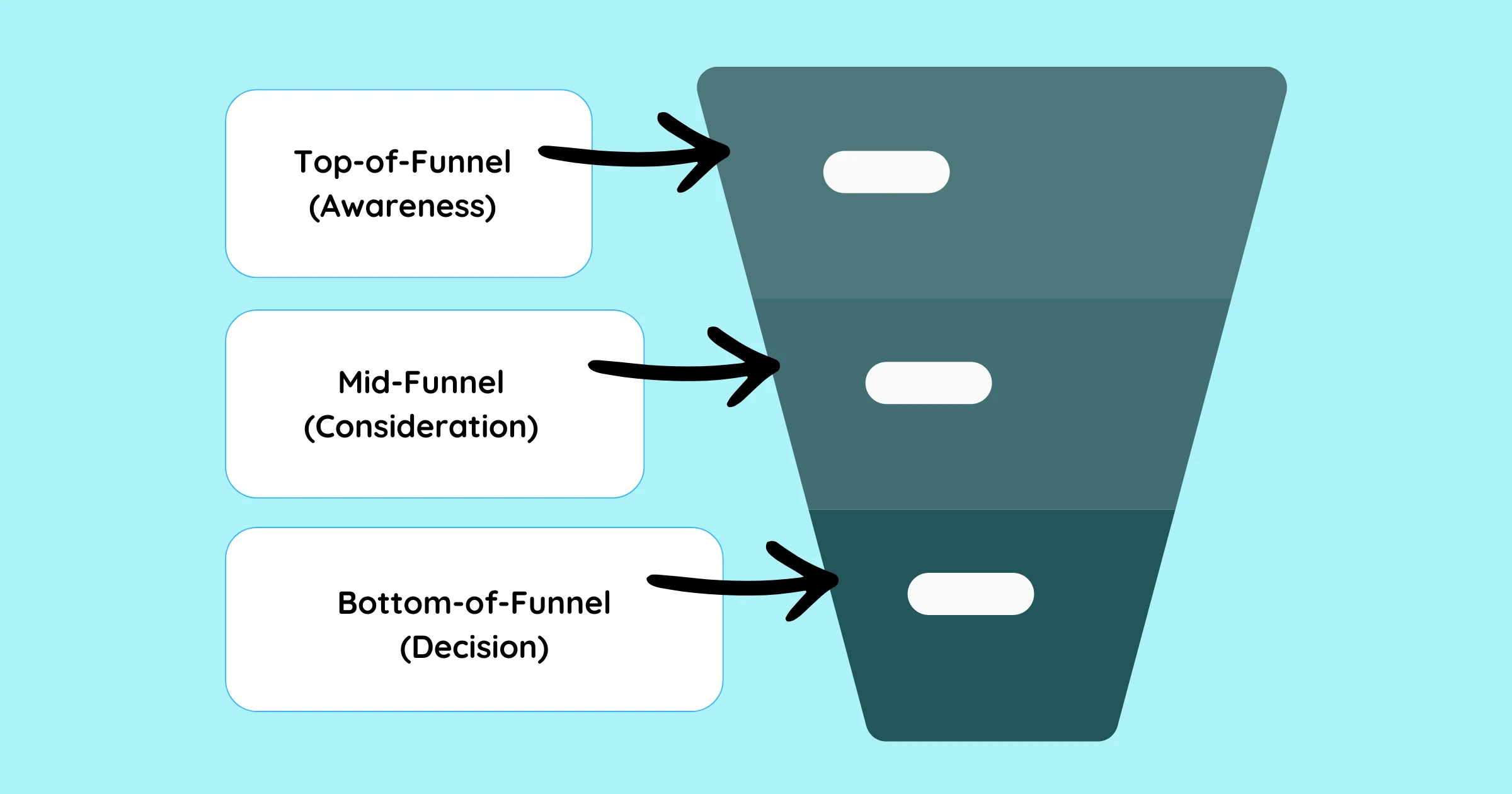
Authority directly influences purchasing decisions. Research from Demand Gen Report found that 47% of B2B buyers consume three to five pieces of content before engaging with a sales representative. Your blog is often the first substantive interaction a prospect has with your brand — and first impressions built through content tend to be durable.
Top-of-funnel: attracting the right audience
Educational, problem-focused blog posts draw in readers who are actively searching for answers. These readers may not be ready to buy, but they are entering your ecosystem. If your content delivers genuine value, they are likely to return, subscribe, or share — all of which expand your brand's footprint.
If you're still building out the structural foundation of your blog, understanding blog layout best practices for business websites is a useful starting point — the structure of your blog shapes how readers engage with your content and how search engines index it.
Mid-funnel: educating and differentiating
As buyers move deeper into consideration, they look for content that helps them evaluate options and understand trade-offs. This is where detailed how-to guides, comparison posts, and case studies earn the most authority. The brand that educates most effectively becomes the natural choice.
For SaaS companies specifically, product-adjacent blog content — explaining concepts, workflows, and use cases — plays a significant role in reducing evaluation friction. This approach is explored in depth in the guide on how SaaS companies can use blog content to educate users.
Bottom-of-funnel: converting with confidence
Even at the decision stage, blog content plays a role. Success stories, ROI-driven posts, and detailed product walkthroughs give buyers the final assurance they need. Well-structured blog content that speaks directly to objections can shorten the time between interest and conversion significantly.
If driving conversions from content is a priority, the guide on turning blog content into qualified leads covers practical strategies for optimizing posts at every stage of the funnel.
Common mistakes that undermine blog authority
Many brands publish blog content without ever achieving authority. This often comes down to a handful of avoidable mistakes:
- Inconsistent publishing: Posting sporadically breaks the trust signals that authority requires. A publishing cadence — even if it's once a week — is more effective than irregular bursts.
- Writing for search engines only: Content that is optimized for keywords but offers no real insight to the reader damages credibility. Search engines are increasingly sophisticated at identifying and demoting thin content.
- Avoiding a defined point of view: Authoritative brands take positions. Content that hedges on every point or avoids nuance reads as generic and forgettable.
- Ignoring distribution: A well-written post that no one reads builds no authority. Sharing content across email, social media, and community channels multiplies the reach of every article you publish.
How SubPage supports an authority-driven blog strategy
Building a consistent, high-quality blog requires the right publishing infrastructure. SubPage is built to help businesses get their content live quickly, without sacrificing structure or SEO fundamentals.
The platform enables teams to manage their blog alongside other business subpages — product pages, documentation, landing pages — without juggling multiple tools. Clean, well-structured pages make a measurable difference in how both readers and search engines perceive your brand. A blog that loads fast, reads clearly, and links intelligently between related content reinforces the authority of every post you publish.
Conclusion
Blog content is one of the most scalable and durable tools a business has for building brand authority. When published consistently, grounded in genuine expertise, and structured to serve the reader at every stage of their journey, it creates a compounding asset that keeps working long after publication.
The brands that dominate their industries in search and in perception are almost always the ones that committed to a blog content strategy early and stayed consistent. Authority is not claimed — it is demonstrated, post by post.
If you're ready to build a blog that positions your brand as a trusted voice in your industry, SubPage gives you everything you need to get started — fast, clean, and built for growth. Sign up for SubPage today and start publishing content that earns authority.
Share: