Changelog vs Release Notes: What’s the Difference and When to Use Each?
Most product teams use the words changelog and release notes as if they mean the same thing. They don't. A changelog is a structured, chronological log of every change made to a product, while release notes are a polished, customer-facing summary built to highlight value. According to a Pendo report, 80% of software features go unused, often because users never find out the features exist in the first place. That single statistic explains why the changelog vs release notes decision matters more than it looks. Picking the wrong format, or skipping one entirely, means your updates ship quietly, and your users never notice. This guide breaks down what each one is, how they differ, and when to use each so your product updates actually get seen, read, and acted on.
What is a changelog?
A changelog lists the important updates made to a product in chronological order. It typically covers new features, bug fixes, security patches, and version bumps, often tagged with a version number and a date. Changelogs are usually terse and technical, written for developers, QA teams, and power users who want to know exactly what shipped and when. Open-source projects, APIs, and developer-first products tend to rely on changelogs the most, since their users need to track exact behavior changes across versions.
A good changelog reads almost like a ledger. Each entry is short, dated, and specific: what changed, in which version, and sometimes a link to related documentation or a pull request. There's little room for marketing language here, because the goal is precision, not persuasion. Developers integrating with an API, for instance, rely on a changelog to know exactly when a breaking change was introduced so they can plan migrations accordingly.
Think of a changelog as your product's audit trail. It doesn't try to sell anyone on a feature; it simply records that the feature exists and when it landed. This consistency is also what makes changelogs valuable for compliance and support teams, who often need to trace an issue back to the exact build where it appeared. This is also why SubPage built a dedicated changelog tool that lets teams log updates by type, version, and date without extra clutter.
What are release notes?
Release notes are a reader-friendly explanation of what changed and, more importantly, why it matters to the user. Where a changelog says "v2.4.1 — fixed pagination bug," release notes say "Browsing is now smoother — we fixed an issue where pages would skip while scrolling." Release notes lean on plain language, screenshots, GIFs, and sometimes a call to action, because the audience is customers and stakeholders, not engineers.
Release notes exist to drive adoption. A great feature that nobody reads about might as well not exist, and release notes are the bridge between shipping something and getting users to actually try it. Because they're written for a general audience, release notes often group several smaller changes under one larger theme, such as "Faster search" or "A redesigned dashboard," instead of listing every individual fix that contributed to it.
Release notes are also where storytelling matters. Teams will often pair a release note with a short video, an in-app banner, or an email campaign so the update doesn't just sit on a page waiting to be discovered. The goal isn't just to inform, it's to get the user to open the app and try the new thing.
Changelog vs release notes: key differences
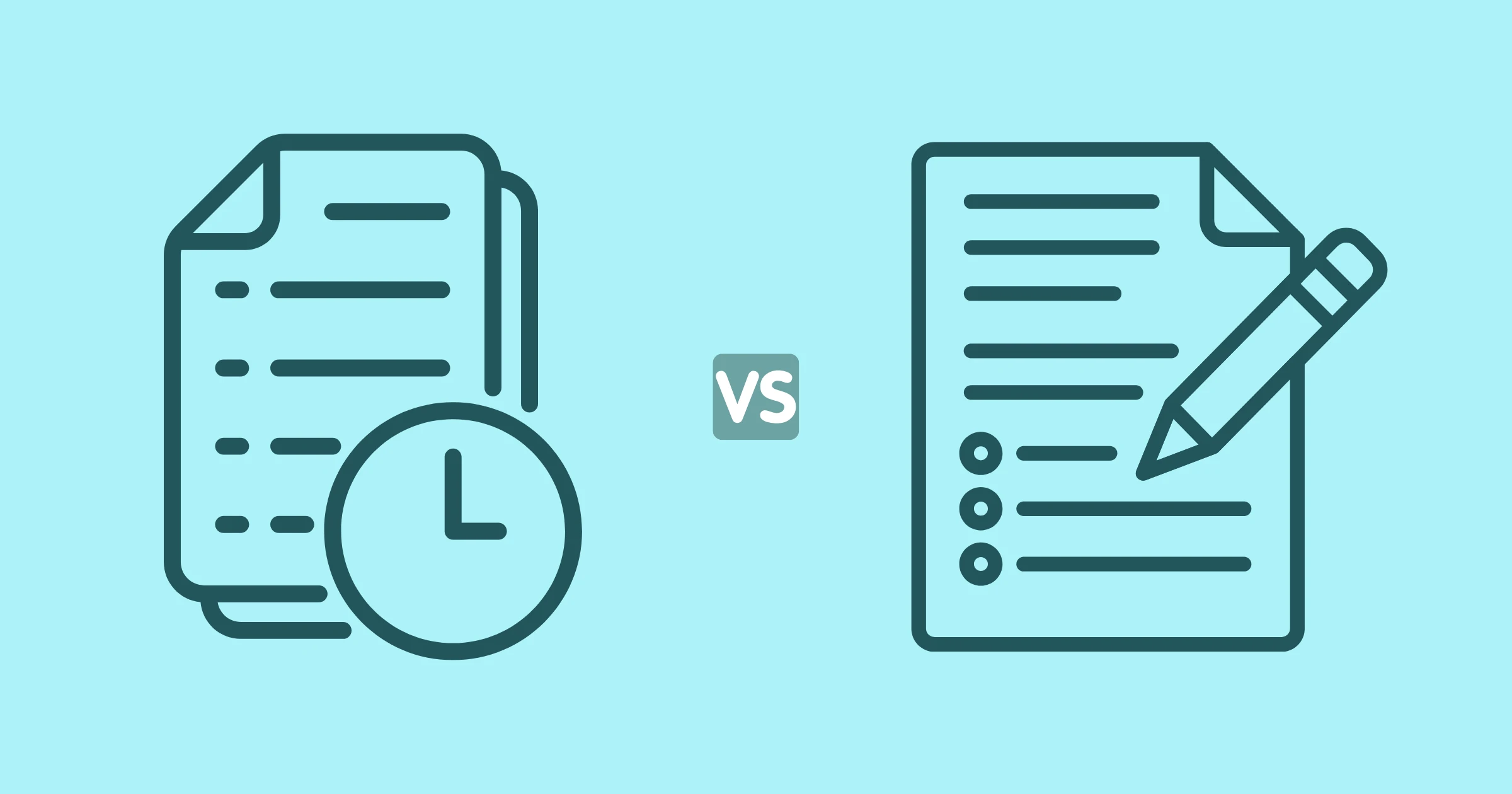
Both documents track product changes, but they differ in purpose, tone, and audience. The mismatch usually shows up when a technical changelog entry gets pasted directly into a customer email, or when release-notes-style copy gets buried inside a developer-facing log where nobody can find the version number they need. Understanding where the two diverge makes it much easier to decide which one a given update actually needs. Here's how the two actually differ:
- Audience: Changelogs are written for developers and internal teams. Release notes are written for end users and customers.
- Tone: Changelogs are terse and technical. Release notes are conversational and benefit-driven.
- Format: Changelogs are typically a list with version numbers and dates. Release notes often include visuals, summaries, and links.
- Purpose: Changelogs document what changed. Release notes explain why it matters and encourage adoption.
- Frequency: Changelogs are updated with every build or commit. Release notes are usually published per major or minor release.
Neither format is inherently better; they simply solve different problems. A SaaS company shipping weekly might update its changelog dozens of times a month while only publishing release notes a handful of times, reserving them for updates substantial enough to warrant a customer-facing announcement.
When to use a changelog vs release notes
Use a changelog when you need a transparent, ongoing record of changes, such as for an API, a developer tool, or a SaaS product where technical users want granular detail. It's also useful internally for QA, support, and engineering teams tracking what shipped in which build.
Use release notes when you're announcing a feature to customers, sending a product update email, or publishing something to a general audience that needs context, not just a version number. Many teams maintain both: a changelog for the historical record and release notes for the announcement. This is exactly the gap SubPage's public changelog feature is built to close, letting you maintain a structured log that still reads well for customers.
A practical example: imagine your team ships a new export feature along with three small bug fixes in the same release. The changelog entry might simply read "v3.1.0 — Added CSV export, fixed timezone display bug, fixed duplicate notification issue." The release note for the same update would likely focus only on the export feature, explain what users can now do with it, and skip the minor fixes entirely, since they rarely move the needle for the average customer.
How SubPage makes this easier
SubPage gives product teams a single, no-code changelog builder that works for both technical logs and customer-facing updates, without requiring a separate tool for each format. A few features stand out:
- Simple editor: Add a heading, description, update date, version, and log type without dealing with a complicated CMS.
- Log types and categorization: Tag updates as fixes, features, or major releases, each with its own color, so readers can scan.
- RSS feed: Every changelog gets an RSS feed that can connect to tools like Zapier to notify customers via Slack, WhatsApp, or email.
- Collaborative writing: Share the editor with teammates for review and proofreading before anything goes live.
- Search and filters: Customers can quickly find a specific fix or feature instead of scrolling through a long history.
Because SubPage supports both structured logs and a more visual, narrative layout, teams can run their changelog and their release-notes-style announcements from the same place instead of stitching together separate tools. The same editor who logs a quick bug fix can also showcase a major feature launch with a hero image and a longer description, which means you're not forced to choose one format for your entire product history. If you're still comparing platforms, our breakdown on what to look for in a changelog tool before you commit covers the must-have features in more depth.
Why getting this right matters
Treating a changelog and release notes as interchangeable usually leads to one of two outcomes: a changelog so dense that customers stop reading it, or release notes so vague that developers can't tell what actually changed in a given build. Neither outcome serves the audience it's meant for.
Getting the distinction right also pays off beyond the update itself. A well-maintained public changelog signals that a product is actively developed, which builds trust with prospective customers evaluating your SaaS. Clear, benefit-led release notes reduce repetitive support tickets, since users already know what changed before they ask. Together, the two formats cover both the technical record and the customer relationship, which is why most mature SaaS companies invest in maintaining both rather than picking just one.
Common mistakes teams make
- Writing one document and reusing it everywhere: a changelog entry pasted straight into a marketing email confuses customers who don't know what "v2.4.1" means.
- Burying the changelog: hiding technical updates inside a PDF or a private wiki makes it hard for developers and support teams to find what they need quickly.
- Skipping release notes for major features: shipping a meaningful update without an announcement means most users simply never discover it exists.
- Inconsistent publishing: updating a changelog sporadically undermines the trust it's meant to build, since users start to wonder what changes were never logged.
Most of these mistakes come down to treating documentation as an afterthought rather than a regular part of the release process. Building it into your workflow, ideally with a tool that handles formatting and distribution automatically, removes the friction that usually causes teams to skip it.
Conclusion
A changelog and release notes solve different problems: one documents, the other communicates. Most growing products eventually need both. SubPage makes it simple to manage updates, create your changelog today, and keep your users in the loop.