Candidate Management
Candidate Management is the strategic process of overseeing and optimizing the entire candidate journey within an organization, from initial sourcing and engagement to hiring and onboarding. This process includes attracting, nurturing, tracking, and communicating with candidates throughout each recruitment phase to ensure a seamless experience that aligns with the company’s brand and goals.
Key Components of Candidate Management
1. Sourcing and Outreach
Identifying and attracting qualified candidates through job postings, networking, referrals, and recruitment marketing. Effective candidate management ensures that all candidates are introduced to the organization and its culture in a way that resonates with them, fostering initial interest and engagement.
2. Application Tracking
Using Applicant Tracking Systems (ATS) or other software to monitor candidate progress through various stages of recruitment. This helps recruiters stay organized, maintain detailed candidate records, and ensure no candidate is overlooked in the process.
3. Candidate Engagement and Communication
Regular, personalized communication with candidates is essential. This includes acknowledging applications, providing updates, answering questions, and scheduling interviews. Effective candidate management emphasizes a consistent and respectful communication strategy to foster a positive candidate experience and minimize drop-offs.
4. Interview Scheduling and Feedback Management
Streamlining interview scheduling to accommodate both candidate and interviewer availability, while ensuring timely and constructive feedback after interviews. This demonstrates respect for the candidate’s time and interest, as well as transparency in the recruitment process.
5. Offer Management and Onboarding Preparation
When extending offers, candidate management ensures clarity and alignment on role expectations, compensation, and onboarding logistics. It includes preparing onboarding materials and planning a smooth transition for candidates into their new roles, creating a positive start to their employment journey.
Why Candidate Management is Important in the Recruitment Process
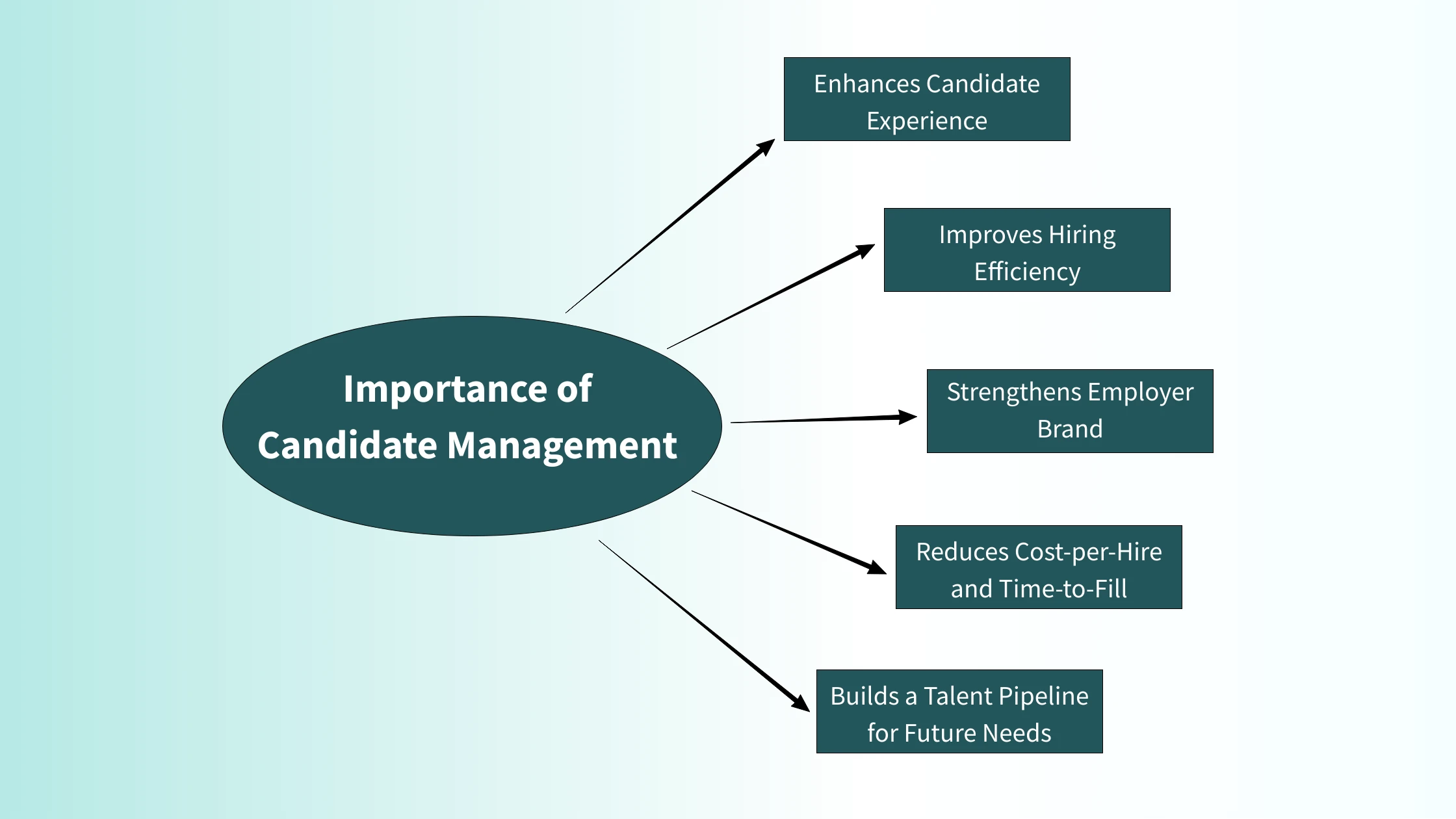
1. Enhances Candidate Experience
A structured and responsive candidate management process ensures candidates feel valued, respected, and informed throughout their journey. Positive candidate experiences contribute to the organization’s reputation as an attractive workplace, increasing the likelihood of securing top talent.
2. Improves Hiring Efficiency
By tracking and managing candidate progress through a centralized system, recruiters can streamline operations, reduce redundancy, and speed up the hiring process. Faster hiring cycles help businesses meet staffing needs more efficiently, which is critical in competitive job markets.
3. Strengthens Employer Brand
Engaging with candidates professionally and transparently builds the company’s employer brand. Candidates who have good experience, even if they aren’t hired, are more likely to speak positively about the organization, increasing its appeal to future job seekers.
4. Reduces Cost-per-Hire and Time-to-Fill
By minimizing bottlenecks and managing candidates effectively, organizations can reduce recruitment costs associated with prolonged hiring processes. Faster hiring also helps companies avoid productivity losses due to unfilled roles.
5. Builds a Talent Pipeline for Future Needs
Effective candidate management is crucial for developing a talent pool that can be tapped for future roles. By maintaining positive relationships with qualified candidates, organizations can revisit these connections when new opportunities arise, streamlining the talent acquisition process and reducing the need to restart sourcing efforts from scratch.
In modern recruitment, candidate management often relies on technology such as ATS, CRM tools for recruitment, and AI-powered tools for automated screening and communication.
