7 Best Recruiting Software for SMB's in 2026
Finding the right recruiting software can make or break your hiring success. Modern platforms have evolved from simple job posting tools into comprehensive systems that streamline candidate sourcing, tracking, evaluation, and onboarding—all while integrating seamlessly with your existing business tools.
The challenge isn't finding options; it's identifying which platform delivers genuine value for your specific needs without overwhelming your team with unnecessary complexity or draining your budget with enterprise-level pricing.
This guide examines the seven best recruiting software platforms for 2026, evaluating each based on functionality, ease of use, and value proposition. Whether you're building your first hiring process or scaling recruitment operations, these platforms represent the most effective solutions for modern talent acquisition.
Software | Primary Focus | Key Strengths | Best For | Starting Price |
SubPage | Recruitment & ATS | Careers page in minutes, built-in ATS, AI job descriptions, Zapier & LinkedIn integrations, embeddable job widgets | Startups & teams needing fast, simple, professional hiring | Free plan · From $20/month |
Workable | Full Recruiting Platform | Robust ATS, candidate sourcing, automation, job board distribution, team collaboration | Growing teams with ongoing hiring needs | From ~$360/month |
HRone | All-in-One HR Suite | Recruiting + employee management, payroll, onboarding, HR workflows | Companies wanting recruitment inside a full HR system | From ~$85/month |
Recruiter Flow | ATS for Recruiters | Custom workflows, candidate pipelines, collaborative hiring, job posting tools | Recruitment agencies & in-house recruiters | From ~$149/month |
Bullhorn | Staffing & CRM | ATS + CRM, client management, candidate sourcing, analytics, business development tools | Staffing agencies & recruitment firms | Custom (enterprise pricing) |
Crelate | ATS + CRM | Candidate & client management, workflow automation, reporting, collaboration | Agencies & executive search teams | Custom Pricing |
Teamtailor | Employer Branding & ATS | Branded careers pages, candidate experience focus, collaboration, analytics | Companies prioritizing employer branding | Custom Pricing |
Top Recruiting Software Platforms in 2026
The best recruiting software platforms in 2026 combine comprehensive applicant tracking, collaborative hiring capabilities, and seamless integration with business tools to create efficient, professional recruitment operations. These systems enable organizations to attract quality candidates, evaluate applicants systematically, and make confident hiring decisions while reducing administrative overhead and improving candidate experiences.
Whether you're building your first careers page, managing dozens of open positions simultaneously, or optimizing recruitment workflows across multiple departments, modern recruiting software provides the infrastructure needed to compete effectively in today's talent market. With features ranging from AI-powered job description generation to advanced analytics and multi-channel candidate sourcing, these platforms deliver capabilities that were previously available only to organizations with substantial recruitment budgets.
Discover the top recruiting software platforms for 2026 to transform your hiring process and build stronger teams. Below, we examine the seven leading solutions:
1. SubPage
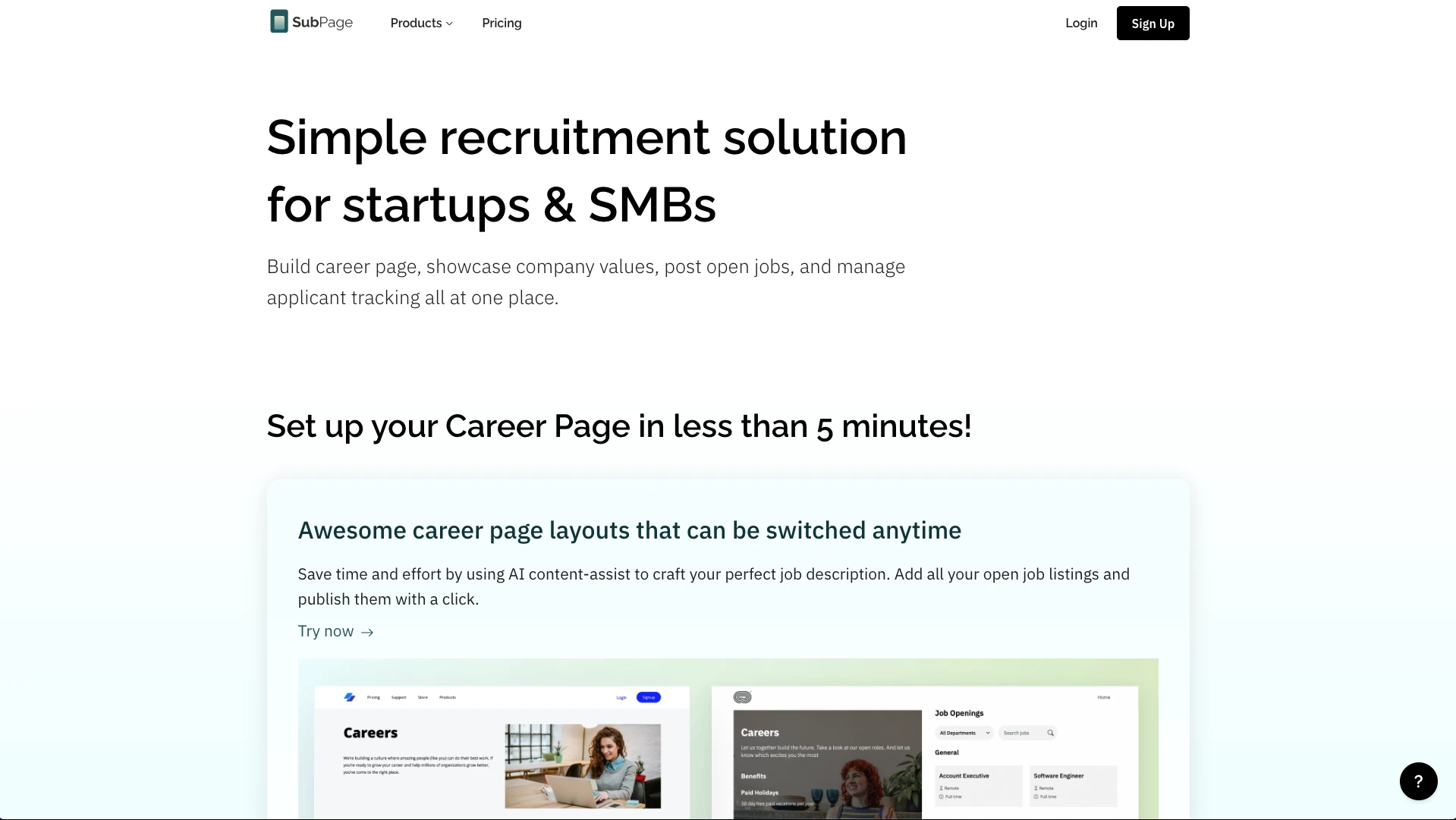
SubPage is a recruiting software platform designed for organizations that need professional applicant tracking and careers page functionality without technical complexity or enterprise-level costs. The platform focuses on delivering essential recruiting capabilities through an intuitive interface that enables teams to deploy effective hiring processes quickly and operate them efficiently without specialized training.
SubPage addresses the core recruiting needs of modern organizations: establishing a credible employer brand presence, managing candidates systematically through evaluation stages, automating repetitive administrative tasks, and enabling collaborative hiring decisions. The system integrates seamlessly with business tools already in use, creating automated workflows that eliminate manual data transfer and reduce coordination overhead.
Key Features:
- Instant career page setup: SubPage lets teams launch SEO-optimized, W3C-compliant career pages in minutes using ready-made templates. Layouts can be switched anytime as branding evolves—no developers or technical setup required.
- On-site job embedding: Open roles can be embedded directly into any website using lightweight widgets, ensuring job listings stay consistent with your brand while increasing reach across all digital touchpoints.
- End-to-end application handling: From custom application forms to automated email alerts, SubPage centralizes the entire hiring flow. Candidates move through clearly defined stages, replacing error-prone spreadsheets with a structured system.
- Automation with LinkedIn and Zapier: New jobs can be published automatically to LinkedIn, applications synced to Google Sheets, Slack alerts triggered for qualified candidates, and recruitment data connected to existing tools through Zapier.
- Built-in applicant tracking: All candidates are managed within SubPage’s native ATS, with filtering by role, stage, and status—removing the need for external tracking tools or disconnected workflows.
- AI-assisted job descriptions: SubPage’s AI helps generate clear, professional job descriptions in seconds, ensuring consistency and quality across roles without relying on manual writing or external copywriters.
Best For: Organizations of all sizes that need professional, easy-to-deploy recruiting software for establishing branded careers pages, managing candidates efficiently, and integrating hiring workflows with existing business tools without technical complexity or enterprise pricing.
Why SubPage Is the Optimal Choice for Modern Recruiting:
- Designed for immediate deployment: SubPage eliminates lengthy setup processes, enabling organizations to launch professional recruitment capabilities within minutes, allowing teams to begin hiring immediately when talent needs arise without waiting for implementation cycles.
- Optimized for all team members: The platform requires no technical expertise, ensuring all stakeholders can contribute to hiring processes effectively without specialized training, IT support, or technical assistance for routine operations.
- Powered by automation and AI: Teams benefit from AI-generated job descriptions and automated workflows through Zapier and LinkedIn integration, multiplying recruiting efficiency without increasing headcount or administrative burden on existing staff.
- Built for professional presentation: Organizations of any size can present polished, credible employer brands through professionally designed careers pages that compete effectively with larger competitors in the talent market.
- Built for scalability: As organizations grow, SubPage scales seamlessly, offering features that work for both the first hire and the hundredth, with pricing that remains accessible as recruitment needs expand.
Pricing:
SubPage offers a free plan to get started, with paid plans beginning at $20/month, making professional recruiting accessible for teams with limited HR budgets. You can start hiring immediately with no upfront cost or long-term commitment and begin receiving qualified applications right away.
Sign up for free and start recruiting the right candidates instantly with SubPage.
2. Workable
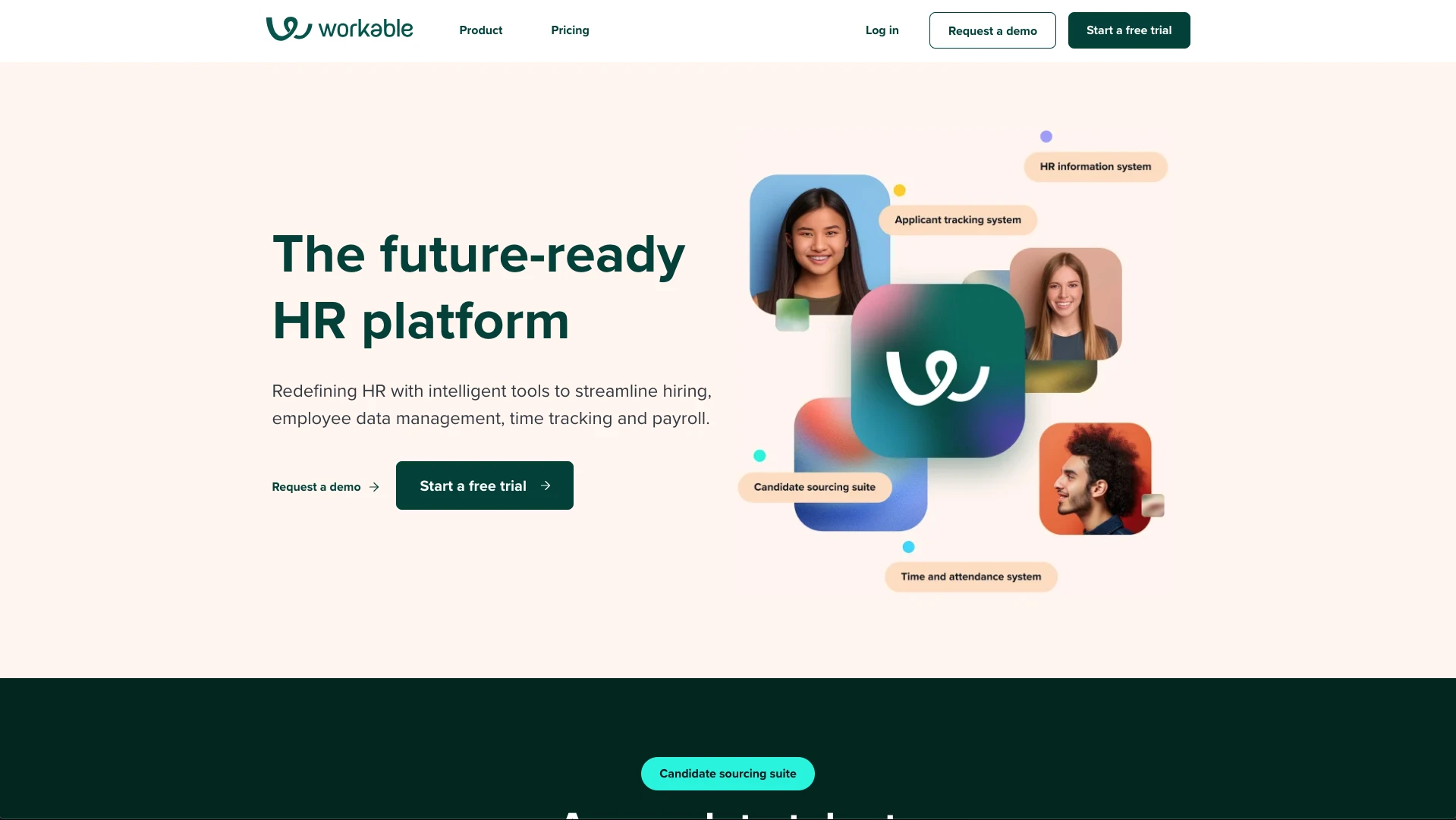
Workable is a comprehensive recruiting software platform that provides applicant tracking, candidate sourcing, and hiring management tools designed for businesses of various sizes seeking full-featured recruitment solutions.
Key Features:
- Workable offers a robust ATS that helps teams manage candidates through every stage of the hiring process, from initial application to final offer acceptance, with organized pipelines and status tracking.
- The platform includes candidate sourcing features that help recruiters find and engage potential candidates through various channels, databases, and talent pools to proactively build recruitment pipelines.
- It provides tools for creating job postings and distributing them across multiple job boards, social media platforms, and career sites to maximize reach and visibility across candidate channels.
- Workable supports team collaboration through features that enable hiring managers and team members to review candidates, share structured feedback, and participate in hiring decisions collectively.
- The platform offers extensive integration capabilities with various HR tools, assessment platforms, background check services, and business systems to streamline recruitment workflows and eliminate manual data transfer.
- Workable includes automation features for repetitive tasks like interview scheduling, candidate communications, workflow triggers, and status updates to improve recruiting efficiency and reduce administrative burden.
Pricing: Paid plans are based on company size and features; they typically start around $360/month.
Best For: Businesses of various sizes that need a full-featured recruiting platform with candidate sourcing capabilities, extensive automation options, and comprehensive integration ecosystems.
3. HRone
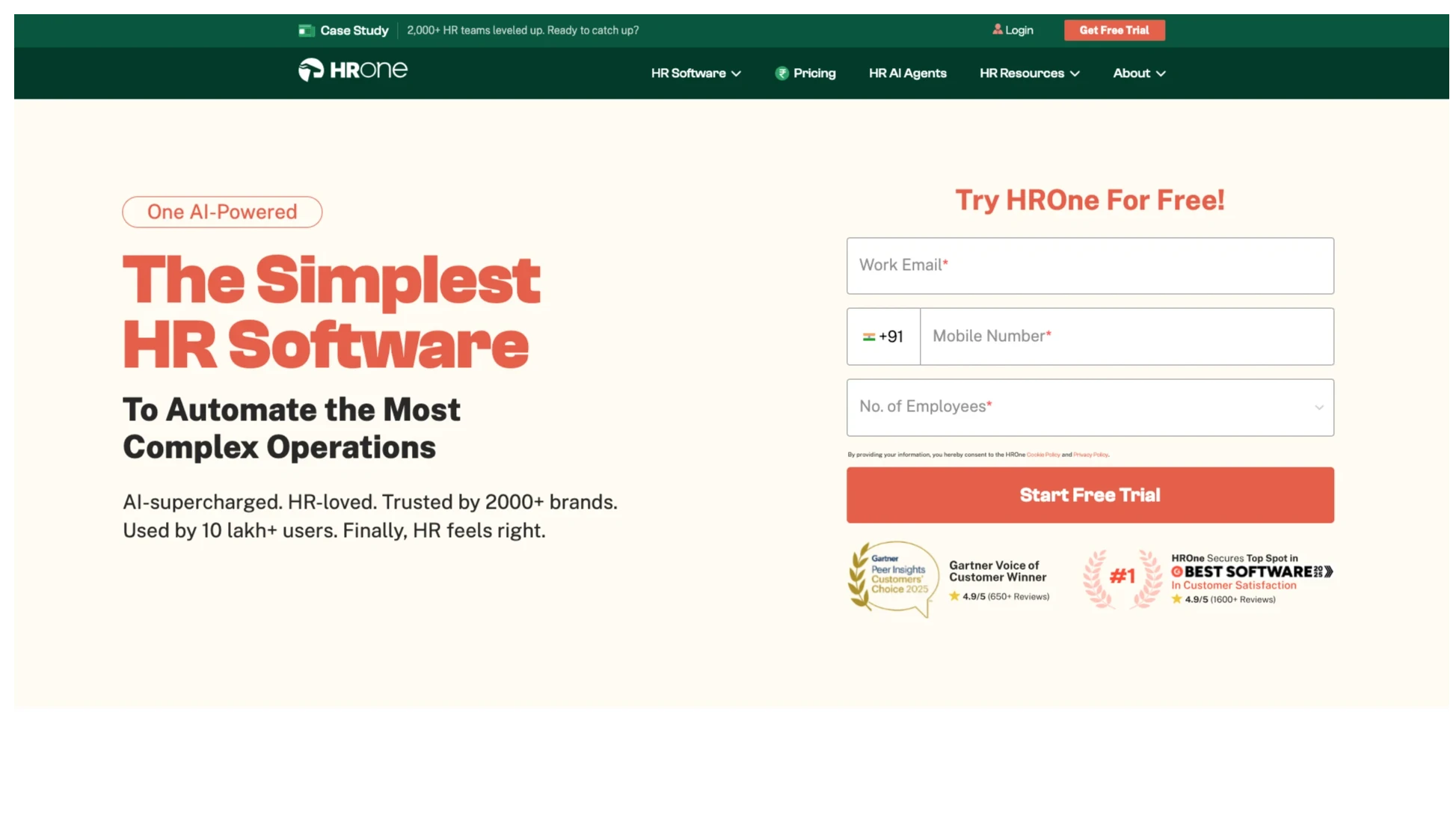
HRone is a human resources management platform that includes recruiting and applicant tracking capabilities as part of a broader HR suite covering employee management, payroll, and workforce administration.
Key Features:
- HR One provides integrated applicant tracking that allows teams to manage recruitment processes from job posting to hiring within a unified HR platform that connects with employee management systems.
- The platform offers candidate management tools that help teams evaluate applicants, schedule interviews, track communications, and maintain organized recruitment pipelines alongside employee data.
- It includes HR management features that extend beyond recruiting, covering employee information management, benefits administration, time tracking, and performance management in one system.
- HR One integrates recruiting with onboarding processes, creating seamless transitions from candidate to employee and ensuring consistent data flow between recruitment and employee management.
- The platform offers tools for creating job postings, managing applications, and tracking candidates through the hiring process, featuring standard applicant tracking functionality.
Pricing: Pricing starts at $85/month for paid plans.
Best For: Companies seeking an all-in-one HR platform that combines recruiting, employee management, payroll, and HR administration in a single integrated system.
4. Recruiter Flow
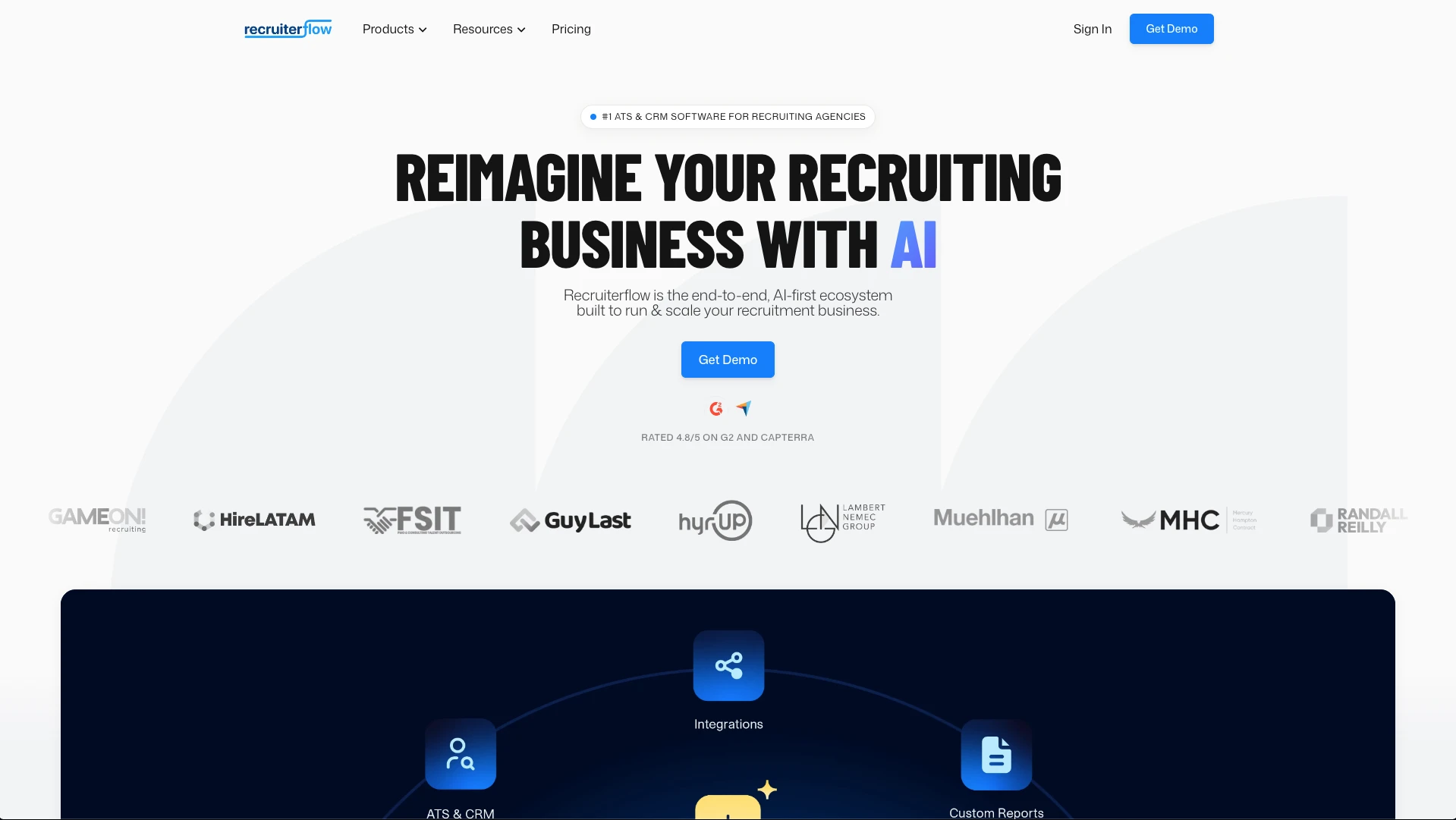
Recruiter Flow is a recruiting software solution that provides applicant tracking, candidate management, and hiring workflow tools designed for recruitment agencies and in-house recruiting teams.
Key Features:
- Recruiter Flow offers an applicant tracking system that enables teams to organize candidates, track progress through hiring stages, and maintain comprehensive recruitment pipelines with customizable workflows.
- The platform includes candidate management features that help recruiters maintain detailed candidate profiles, track interactions, schedule interviews, and manage communications throughout the recruitment process.
- It provides tools for creating and publishing job postings across multiple channels, helping organizations reach candidates on various platforms and career sites simultaneously.
- Recruiter Flow supports collaborative hiring by enabling team members to review candidates together, share feedback, provide evaluations, and participate in hiring decisions through the platform.
- The platform offers workflow customization that allows teams to adapt hiring processes to different roles, departments, and recruitment strategies while maintaining consistency.
Pricing: Paid plans starting from approximately $149/month, with pricing varying by features and team size
Best For: Recruitment agencies and in-house recruiting teams that need customizable workflows, detailed candidate management, and collaborative hiring capabilities.
5. Bullhorn
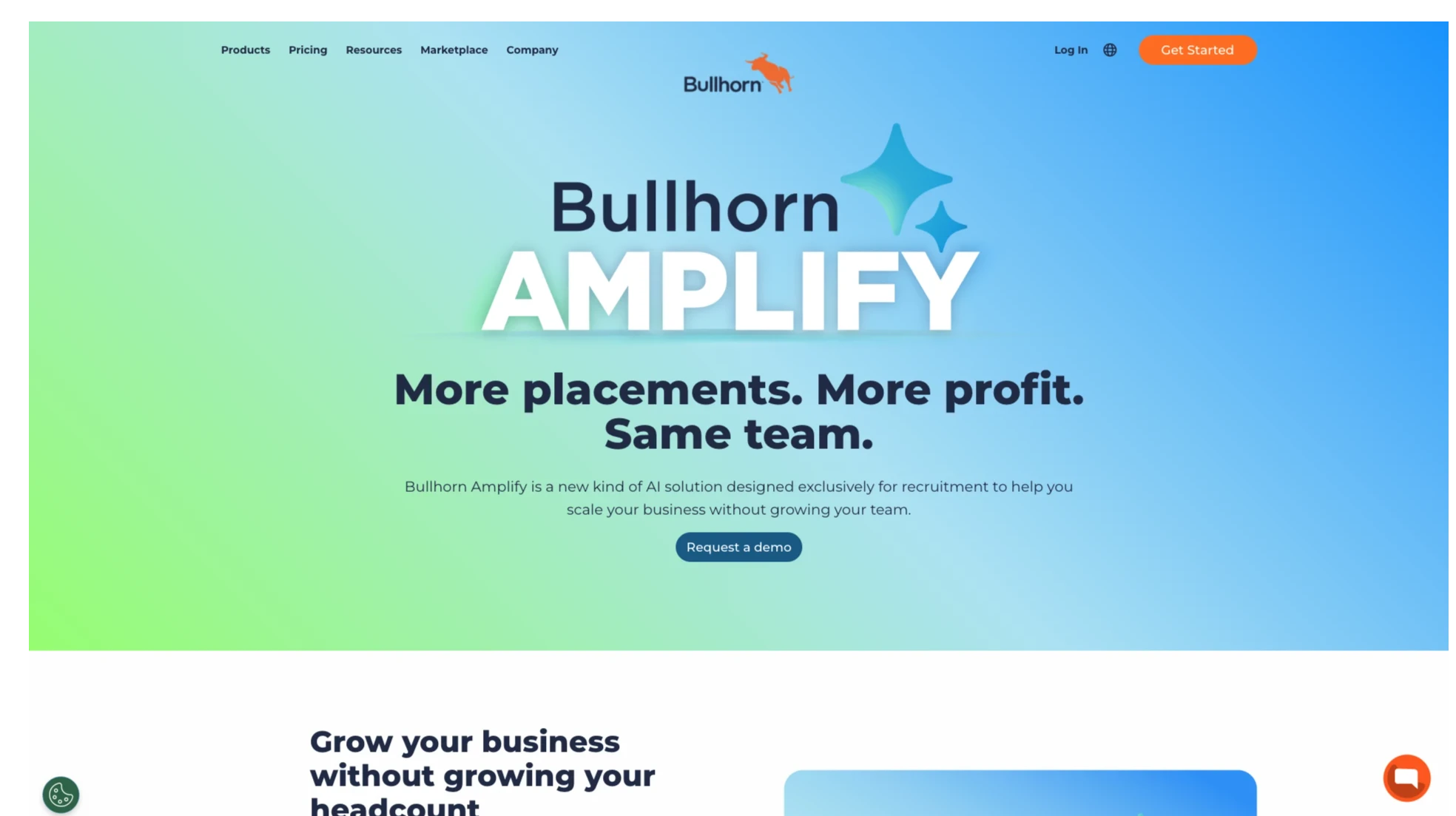
Bullhorn is a recruiting and staffing software platform designed primarily for staffing agencies and recruitment firms, providing comprehensive tools for candidate relationship management, client management, and placement operations.
Key Features:
- Bullhorn offers a sophisticated applicant tracking and candidate relationship management (CRM) system that enables recruitment firms to manage large candidate databases, track interactions, and maintain ongoing relationships with talent pools.
- The platform includes client management features that help staffing agencies manage relationships with client companies, track job orders, manage contracts, and coordinate placements effectively.
- It provides tools for candidate sourcing, screening, and matching that help recruiters identify qualified candidates for client positions and manage the placement process from initial contact to successful hire.
- Bullhorn supports business development and sales features designed for recruitment agencies, including pipeline management, activity tracking, and revenue forecasting capabilities.
- The platform offers extensive integration capabilities with job boards, background check services, assessment tools, and business systems commonly used by staffing firms and recruitment agencies.
- Bullhorn includes reporting and analytics features that provide insights into recruitment metrics, placement rates, revenue performance, and operational efficiency for staffing businesses.
Pricing: Custom pricing available on request; typically positioned as an enterprise-level solution for staffing agencies
Best For: Staffing agencies and recruitment firms that need comprehensive candidate and client management, placement operations, and business development tools designed for recruitment as a business.
6. Crelate
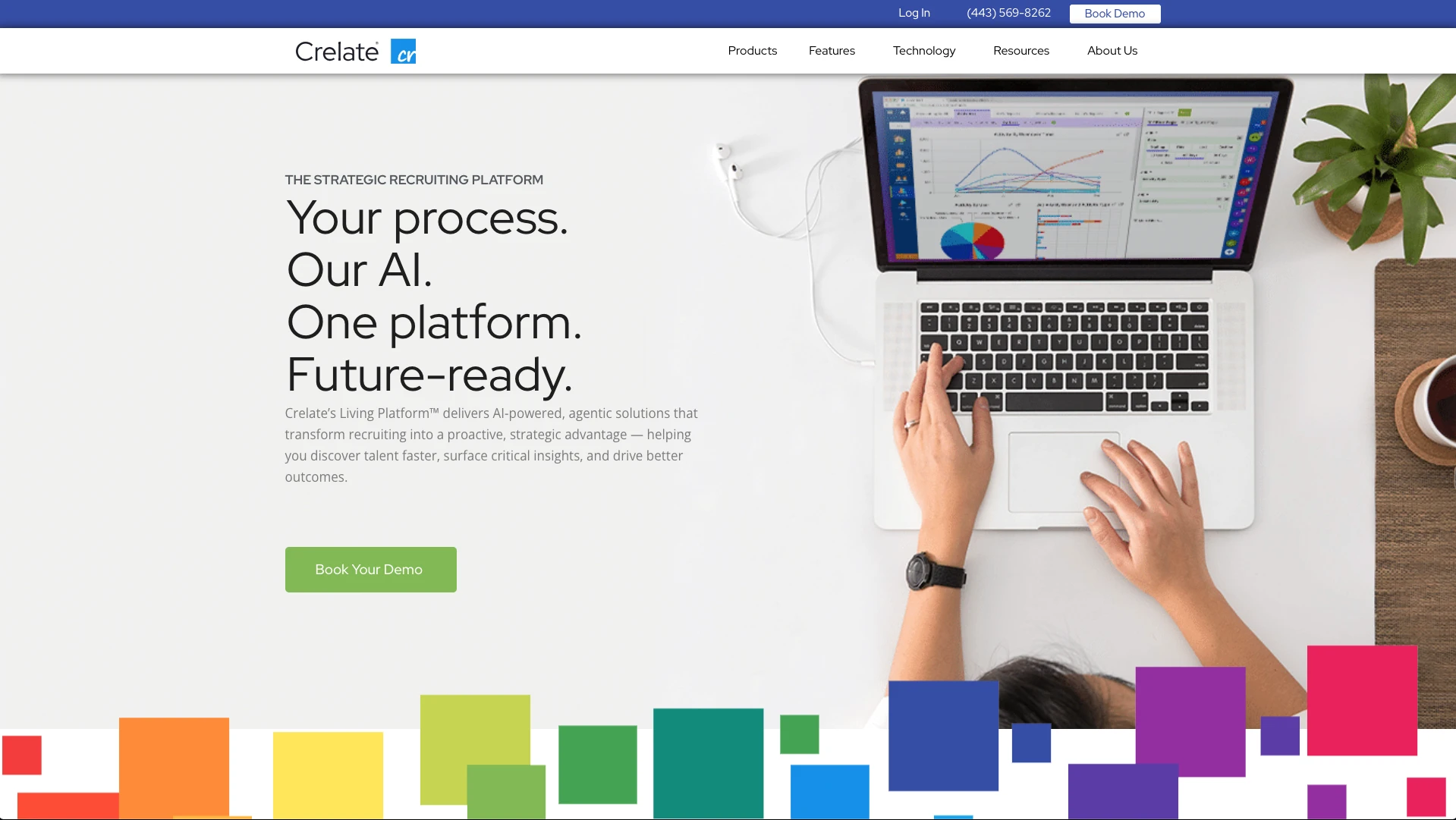
Crelate is a recruiting software platform that combines applicant tracking, candidate relationship management, and business development tools designed for recruitment agencies, executive search firms, and corporate recruiting teams.
Key Features:
- Crelate provides an integrated ATS and CRM system that enables recruiting teams to manage candidates, track relationships, maintain talent pools, and coordinate recruitment activities in one unified platform.
- The platform includes tools for managing client relationships, tracking job orders, coordinating search assignments, and maintaining organized records of placements and business development activities.
- It offers candidate sourcing and database management features that help recruiters build and maintain comprehensive talent pools, track candidate interactions, and identify qualified matches for open positions.
- Crelate supports collaborative recruiting by enabling team members to share candidate information, coordinate on search assignments, provide feedback, and participate in placement decisions collectively.
- The platform provides workflow automation features for repetitive tasks like email sequences, activity reminders, status updates, and candidate nurturing to improve recruiting efficiency.
- Crelate includes reporting and analytics capabilities that provide insights into recruiting performance, placement metrics, pipeline health, and business development effectiveness.
Pricing: Request pricing by filling out the form.
Best For: Recruitment agencies, executive search firms, and corporate recruiting teams that need combined ATS and CRM capabilities for managing both candidates and client relationships.
7. Teamtailor
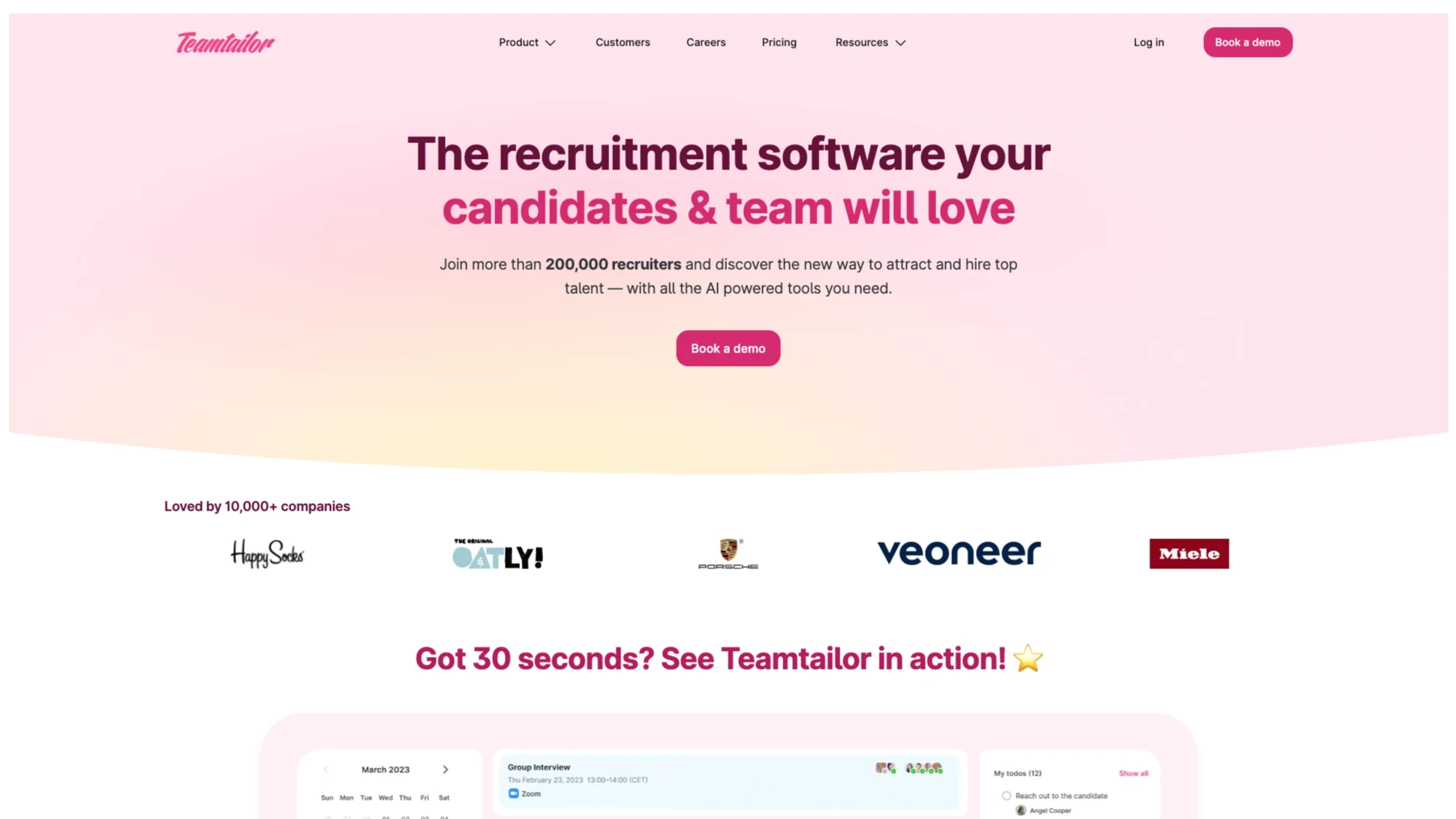
Teamtailor is a recruiting software platform that emphasizes employer branding, careers page creation, and candidate experience alongside applicant tracking and hiring management capabilities.
Key Features:
Team Tailor offers extensive career page customization that enables organizations to create branded, visually appealing recruitment sites that showcase company culture, values, and open positions effectively.
- The platform includes applicant tracking functionality that helps teams manage candidates through hiring stages, organize applications, track communications, and coordinate evaluation processes systematically.
- It provides tools for creating engaging job postings with rich media, employee testimonials, team information, and company content that helps candidates understand the organization and role clearly.
- Team Tailor supports collaborative hiring by enabling team members to review candidates, share feedback, participate in evaluations, and make collective hiring decisions through the platform.
- The platform offers integration capabilities with various HR tools, job boards, and business systems to connect recruiting workflows with existing technology ecosystems and eliminate manual processes.
- Team Tailor includes analytics features that provide insights into recruiting performance, candidate sources, application rates, and hiring effectiveness to inform recruitment strategies.
Pricing: Paid plans with custom pricing based on company size and features
Best For: Organizations that prioritize employer branding, candidate experience, and visually engaging careers pages alongside standard applicant tracking and hiring management capabilities.
These platforms represent the best recruiting software solutions for 2026, each offering unique capabilities to suit different organizational needs, recruitment strategies, and operational priorities. As you evaluate which solution fits your hiring requirements, consider the specific features that will streamline your recruitment processes and accelerate team building.
Key Features to Look for in Recruiting Software
As modern recruiting becomes increasingly technology-driven, with the majority of organizations now using specialized software for talent acquisition, selecting a platform with the right capabilities has become essential for competitive hiring. Organizations need tools that maximize recruiting efficiency while improving candidate experiences and hiring outcomes.
In this section, we'll explore the key features that make recruiting software effective for modern organizations.
1. Comprehensive Applicant Tracking System
A robust ATS forms the foundation of effective recruiting software, providing the infrastructure needed to manage candidates systematically throughout the hiring process.
- Candidate pipeline management: The system should organize candidates across multiple positions and hiring stages, providing clear visibility into recruitment progress and enabling efficient coordination across hiring teams.
- Application processing: Tools for reviewing, filtering, sorting, and evaluating applications help teams quickly identify qualified candidates and advance them through evaluation stages without manual processes.
- Status tracking and notifications: Clear visibility into candidate progress, automated status updates, and notification systems ensure nothing falls through the cracks and maintain professional candidate experiences throughout recruitment.
2. Professional Careers Page Capabilities
Your careers page serves as the primary touchpoint between your organization and potential candidates, and recruiting software should enable a professional, engaging presentation.
- Customizable templates: Ready-to-use, professionally designed layouts save implementation time and ensure a polished presentation without requiring design resources or technical expertise.
- Brand consistency: The ability to incorporate organizational branding, messaging, culture content, and visual identity ensures recruitment presence aligns with overall brand positioning and values.
- SEO optimization: Built-in search engine optimization features help job postings rank in search results, attracting organic traffic from qualified candidates actively seeking opportunities.
3. Collaborative Hiring Capabilities
Modern hiring involves multiple stakeholders across departments, and recruiting software should facilitate efficient collaboration and collective decision-making.
- Shared candidate access: Team members should be able to access candidate information, review applications, and participate in evaluation processes within the platform without coordination overhead.
- Structured feedback tools: Features like scorecards, rating systems, comment threads, and standardized evaluation criteria help collect consistent feedback and make objective hiring decisions.
- Role-based permissions: The ability to control access levels, viewing permissions, and editing capabilities ensures security while enabling appropriate stakeholder participation in recruiting processes.
4. Integration and Automation
Seamless connections with existing business tools and automated workflows eliminate manual processes, reduce administrative burden, and improve recruiting efficiency.
- Third-party integrations: Platforms should connect with commonly used business tools, including email systems, calendars, LinkedIn, Zapier, HRIS platforms, and assessment services, to create unified workflows.
- Automated notifications: Automatic communications for application confirmations, interview scheduling, status updates, and candidate follow-ups maintain engagement without manual effort.
- Workflow automation: Features that automatically advance candidates between stages, trigger actions based on events, or sync data across systems reduce administrative tasks and ensure consistency.
5. AI-Powered Recruiting Tools
Artificial intelligence capabilities can significantly accelerate recruiting processes while improving quality and consistency across hiring operations.
- Job description generation: AI tools that create compelling, professional job descriptions save time, ensure quality, and help attract qualified candidates without requiring copywriting expertise.
- Candidate screening: AI-powered screening capabilities can analyze applications, identify top candidates based on specified criteria, and suggest matches for open positions.
- Automated scheduling: Intelligent scheduling assistants can coordinate interview times across multiple stakeholders, eliminating back-and-forth coordination and accelerating hiring timelines.
6. Reporting and Analytics
Data-driven insights enable organizations to measure recruiting effectiveness, identify improvement opportunities, and optimize talent acquisition strategies.
- Recruiting metrics: Platforms should track key performance indicators, including time-to-fill, source effectiveness, candidate pipeline health, and hiring conversion rates.
- Source attribution: Understanding which channels produce the highest-quality candidates enables optimization of recruiting investments and channel strategies.
- Custom reporting: The ability to create customized reports for different stakeholders ensures relevant insights reach decision-makers in accessible formats.
7. Mobile Accessibility
Modern recruiting requires flexibility, and mobile-optimized platforms enable recruiting activities from anywhere while improving candidate experiences.
- Mobile-responsive design: Careers pages and application processes should function seamlessly on mobile devices, as significant portions of candidates research and apply via smartphones.
- Mobile application: Native mobile apps or responsive interfaces enable hiring managers and recruiters to review candidates, provide feedback, and coordinate hiring activities from mobile devices.
8. Scalable Pricing Models
Cost-effective pricing structures ensure recruiting software remains accessible as organizations grow and recruiting needs expand.
- Transparent pricing: Clear, straightforward pricing structures help organizations understand costs, budget appropriately, and avoid unexpected expenses as recruitment scales.
- Flexible plans: Multiple pricing tiers or customizable feature sets enable organizations to select capabilities that match current needs while providing room for growth.
- Free trial availability: The ability to test platforms before committing financially reduces implementation risk and ensures the solution meets organizational requirements.
These key features will help you identify which recruiting software aligns with your organization's talent acquisition needs, operational priorities, and budget constraints. By focusing on these capabilities, you'll ensure your recruiting operations can compete effectively in today's competitive talent market.
According to industry research, organizations using modern recruiting software report significant improvements in time-to-hire, candidate quality, and overall recruiting efficiency, demonstrating the substantial impact the right platform can have on talent acquisition outcomes.
Now that we've covered the essential capabilities, let's explore how to choose the right recruiting software for your organization.
How to Choose the Right Recruiting Software
Selecting the right recruiting software requires careful evaluation of your organization's specific needs, operational priorities, growth trajectory, and budget constraints. With numerous platforms available, focusing on factors most relevant to your situation will help identify the solution that best supports your talent acquisition strategy.
According to industry research, the vast majority of recruiting professionals report that implementing recruiting software has positively impacted their hiring processes, demonstrating the significant value the right platform delivers for talent acquisition operations.
Here are key factors to consider when making your decision.
Organization Size and Hiring Volume
Different recruiting software platforms are optimized for different organization sizes and recruitment volumes, so consider both current and anticipated needs.
- Current recruitment scale: If you're managing modest hiring volumes, prioritize simplicity and ease of use over advanced features. If you're conducting high-volume recruitment, focus on platforms that handle large candidate pools efficiently.
- Growth projections: Select software that can scale with your organization. A platform that works for ten employees might not serve you well at one hundred, and migrating systems mid-growth creates disruption.
- Hiring frequency: Consider whether recruitment is continuous or periodic. Some platforms excel at ongoing high-volume hiring, while others work well for occasional hiring cycles.
Budget and Value Proposition
Evaluate recruiting software based on value delivered relative to cost, considering both immediate expenses and long-term return on investment.
- Total cost of ownership: Understand whether pricing is per job posting, per user, per month, or based on features. Include implementation costs, training requirements, and ongoing support in your evaluation.
- Free trial availability: Many platforms offer free trials or limited free plans. Test these before committing to ensure the software meets your needs and delivers promised value.
- Return on investment: Consider improvements in time-to-hire, candidate quality, recruiting efficiency, and administrative burden reduction. More expensive platforms might deliver superior ROI if they significantly improve hiring outcomes.
SubPage offers exceptional value for organizations of all sizes, providing a free plan to get started and paid plans beginning at just $20/month, delivering professional recruiting capabilities at price points accessible to organizations with limited budgets.
Implementation Speed and Ease of Use
Organizations need to move quickly in competitive talent markets, and lengthy implementation processes or steep learning curves can delay recruitment efforts.
- Setup timeframe: Look for platforms that can be configured quickly—ideally within hours or days rather than weeks—so you can begin hiring immediately when needs arise.
- User interface intuitiveness: An intuitive interface reduces training requirements, accelerates team adoption, and ensures all stakeholders can participate effectively in recruiting processes.
- Template and resource availability: Pre-built templates for job descriptions, careers pages, and workflows accelerate setup and ensure professional results without starting from scratch.
SubPage excels in rapid deployment with its zero-learning-curve design that allows teams to launch professional careers pages and begin receiving applications within minutes, supported by AI-powered job description generation and ready-to-use templates.
Feature Alignment with Requirements
Not every organization needs every feature, so focus on capabilities that address your specific recruiting challenges and operational priorities.
- Essential vs. optional capabilities: Identify must-have features (like ATS and careers pages) versus features you might use eventually (like advanced analytics or AI screening) to ensure core needs are met.
- Collaboration requirements: If hiring decisions involve multiple stakeholders across departments, prioritize platforms with robust collaborative features and clear communication tools.
- Integration needs: Consider which tools your organization already uses. If your team relies on Slack, Google Workspace, or specific HRIS platforms, choose software that integrates seamlessly with these systems.
Support and Resources
When recruiting is business-critical, responsive support and comprehensive resources ensure your team can resolve issues quickly and use the platform effectively.
- Customer support quality: Look for platforms with responsive support teams, multiple support channels, clear documentation, and helpful onboarding resources.
- Self-service capabilities: Comprehensive guides, video tutorials, FAQs, and knowledge bases enable your team to solve problems independently without waiting for support responses.
- Product development: Active product development, regular updates, and user community engagement indicate a platform that's continuously improving and responsive to customer needs.
Candidate Experience
The candidate experience your recruiting software enables directly impacts your ability to attract quality talent and maintain positive employer branding.
- Application process quality: Evaluate how easy and intuitive the application process is for candidates, as complex or poorly designed applications deter qualified applicants.
- Mobile optimization: Ensure careers pages and applications function seamlessly on mobile devices, as many candidates research opportunities and apply via smartphones.
- Communication capabilities: Look for platforms that enable timely, professional communication with candidates throughout the hiring process to maintain engagement and positive experiences.
By carefully evaluating these factors—organization size, budget, implementation speed, feature alignment, support quality, and candidate experience—you can confidently select recruiting software that accelerates talent acquisition while remaining manageable for your team.
SubPage, with its AI-powered features, collaborative hiring tools, intuitive interface, rapid deployment, and accessible pricing, offers a compelling option for organizations that want to implement professional recruiting capabilities quickly without sacrificing functionality or candidate experience.
Explore SubPage's pricing and see how it can transform your recruiting process from day one.
Conclusion
In today’s competitive talent market, the right recruiting software helps teams hire faster, smarter, and more effectively. By choosing a platform with strong applicant tracking, automation, and collaboration features, hiring becomes a strategic advantage rather than an administrative task. SubPage offers a simple, affordable solution with AI-powered job descriptions, intuitive workflows, and seamless integrations—making it easy to recruit the right talent and build high-performing teams.
FAQs: Best Recruiting Software in 2026
1. What makes SubPage the best recruiting software for organizations in 2026?
SubPage is designed for organizations that need to implement professional recruiting capabilities quickly, without requiring technical expertise or incurring enterprise costs. It offers an intuitive platform where anyone can create professional careers pages in minutes, complete with AI-powered job descriptions, integrated ATS functionality, and collaborative hiring features. With affordable pricing starting at $20/month and seamless integrations with Zapier and LinkedIn, SubPage is ideal for teams seeking efficient, cost-effective recruiting solutions.
2. How does recruiting software improve talent acquisition efficiency?
Recruiting software enhances efficiency by centralizing candidate management, automating repetitive administrative tasks such as application confirmations and interview scheduling, and facilitating team collaboration on hiring decisions. Features like AI-powered job descriptions, applicant tracking systems, and workflow automation reduce time spent on manual processes, allowing teams to focus on candidate evaluation and faster hiring decisions.
3. What are the collaboration features in SubPage that enhance recruiting?
SubPage offers robust collaboration tools that allow multiple team members to review candidates, share structured feedback, and participate in hiring decisions within the platform. The collaborative hiring features enable cross-departmental involvement without complex permissions or workflows, ensuring all stakeholders stay aligned throughout the recruitment process and can contribute effectively to hiring outcomes.
4. What are the key features of the best recruiting software?
The best recruiting software includes comprehensive applicant tracking systems, professional careers page creation, collaborative hiring capabilities, AI-powered tools for job descriptions and screening, and seamless integrations with existing business tools. These platforms should offer intuitive interfaces, rapid implementation, and scalable pricing that grows with organizational needs.
5. How does recruiting software help with creating job postings?
Recruiting software simplifies job posting creation through AI-powered job description generators, pre-built templates, and easy customization options. Platforms like SubPage allow organizations to generate compelling job descriptions in seconds, publish them on professional careers pages, and distribute them across multiple channels, ensuring openings reach qualified candidates quickly.
6. Is there a free version of SubPage available?
Yes, SubPage offers a free plan that provides essential features for getting started with recruitment, including careers page creation, basic job posting capabilities, and access to core applicant tracking features. This allows organizations to launch hiring processes without upfront investment. Paid plans start at just $20/month and include advanced features like enhanced AI credits, additional job postings, and expanded customization options.
